Friday, March 25, 2022

Atlantic League Rules for 2022 - DH, Hits for Wild Pitches

MLB's partnership with the Atlantic League continues with two experimental rules announced for 2022: the Double-Hook Designated Hitter Adjustment and Dropped Pitch Rule that awards base hits to batters who steal first base on wild pitches.

Major League Baseball announced the test changes, touting positive results through testing rules "that many baseball fans routinely discuss and want to learn more about."
"Many baseball fans" couldn't be reached for comment.

The ALPB 2022 season's rules experiments are as follows:
> Double-Hook Designated Hitter Adjustment. First introduced alongside the rule moving the pitcher's mound back by one foot in 2021 (a change that didn't make it to the end of the season), the Atlantic League's double-hook DH rule held that a team would only retain the designated hitter for as long as the starting pitcher remained in the game: Once the starting pitcher was removed, the DH terminated and the substitute player would have to bat for themself.

In 2022, the double-hook DH rule adjustment allows a team to keep its DH for the entire game if the starting pitcher completes five innings on the mound, while the team would lose its DH if the started fails to complete five innings of work. MLB's equivalent might be informally deemed the "Shohei Ohtani Rule."
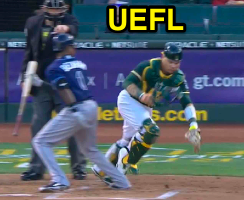
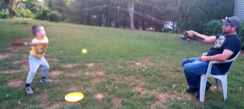
> Dropped Pitch Rule. First introduced in 2019 as "batters may steal first base," this rule states that a batter may attempt to acquire first base on any pitched ball not caught by the catcher.

A batter thus becomes a runner if the following criteria are met: "(i) a pitch, swung at [but not fouled] or taken [but not a hit-by-pitch or fourth ball], is not caught by the catcher, and (ii) both of the batter's feet leave the batter's box, and (iii) the batter, in the umpire's judgment, demonstrates or otherwise creates an impression of his intent to advance to first base. If first base is occupied when the batter chooses to become a runner this creates a force play." New for 2022, batters who arrive at first base safely will be awarded a hit (previously this was a wild pitch or passed ball).
Related PostAtlantic League Debuts New Rules, E-Zone (7/10/19).

Thursday, March 24, 2022

2022 MLB Spring Training Umpire Roster

Major League Baseball's 2022 Spring Training Umpire roster features 76 Major League and 14 Triple-A call-up umpires for a total of 90 umpires assigned to MLB's Arizona's Cactus and Florida's Grapefruit Leagues.

This is a decrease from 2021's Spring Training roster of 97 total umpires, six less umpires than 2020's MLB Spring Training roster of 96 officials, and the lowest total umpire count since we began tracking the MLB + MiLB Invitee Spring Training roster (closest: 91 umpires in 2018 Spring).

The following list features sleeve numbers for all umpires already assigned to fill-in personnel, as well as full-timer MLB uniform numbers.

Umpires in bold are new to the Spring Training list; those without numbers may receive formal uniform number assignments later this Spring (underlined text indicates the umpire has returned to the Spring list after absence from said list in 2021). A sleeve number for a minor league umpire/invitee signifies that this umpire is qualified to work MLB regular season games. Regular season crew chiefs are italicized. Just because a Minor League umpire is not on the invitee list does not mean the umpire will not work any Spring Training games, it simply means they may be on standby or the unofficial "call-up" list for Spring. Observations follow the list.

MLB Spring Training Umpires' Roster - 2022 Pre-Season
MLB StaffMLB StaffMiLB Invitees & Call-Ups
Additon, Ryan 67
Baker, Jordan 71
Barber, Sean 29
Barksdale, Lance 23
Barrett, Lance 16
Barrett, Ted 65
Barry, Scott 87
Bellino, Dan 2
Blakney, Ryan 36
Blaser, Cory 89
Bucknor, CB 54
Carapazza, Vic 19
Carlson, Mark 6
Conroy, Chris 98
Cuzzi, Phil 10
De Jesus, Ramon 18
Diaz, Laz 63
Drake, Rob 30
Dreckman, Bruce 1
Eddings, Doug 88
Emmel, Paul 50
Estabrook, Mike 83
Fairchild, Chad 4
Fletcher, Andy 49
Foster, Marty 60
Gibson, Greg 53
Gibson, Tripp 73
Gonzalez, Manny 79
Guccione, Chris 68
Hallion, Tom 20
Hamari, Adam 78
Hernandez, Angel 5
Hickox, Ed 15
Hoberg, Pat 31
Holbrook, Sam 34
Hoye, James 92
Hudson, Marvin 51
Iassogna, Dan 58
Johnson, Adrian 80
Knight, Brian 91
Kulpa, Ron 46
Layne, Jerry 24
Lentz, Nic 59
Libka, John 84
Little, Will 93
Marquez, Alfonso 72
May, Ben 97
Meals, Jerry 41
Miller, Bill 26
Morales, Gabe 47
Muchlinski, Mike 76
Nauert, Paul 39
Nelson, Jeff 45
O'Nora, Brian 7
Ortiz, Roberto 40
Porter, Alan 64
Rackley, David 86
Randazzo, Tony 11
Rehak, Jeremie 35
Reyburn, D.J. 17
Reynolds Jim 77
Ripperger, Mark 90
Scheurwater, Stu 85
Segal, Chris 96
Tichenor, Todd 13
Timmons, Tim 95
Torres, Carlos 37
Tumpane, John 74
Vanover, Larry 27
Visconti, Jansen 52
Wegner, Mark 14
Welke, Bill 3
Wendelstedt, Hunter 21
Whitson, Chad 62
Wolcott, Quinn 81
Wolf, Jim 28
Bacchus, Erich 101
Ballou, Brock ---
Beck, Adam 102
Ceja, Nestor 103
Livensparger, Shane 43
MacKay, Alex 105
Mahrley, Nick 48
Merzel, Dan 107
Moore, Malachi 108
Moscoso, Edwin 109
Riggs, Jeremy 112
Valentine, Junior 115
Vondrak, Clint 116
Wills, Ryan 118


(14 MiLB Umpires)
(76 MLB Umpires)
(90 Total Umpires)

Information obtained by
UEFL on 3/24/2022.
www.closecallsports.com
Some observations, year-over-year:
  • > 2022's roster of 14 MiLBU invitees features 1 no-#, 11 triple-digit and 2 two-digit umpires.
  • > 2021 Spring Training invitees not included on the 2022 list include John Bacon (70), Paul Clemons (104), Brennan Miller (55), Jose Navas (110), and Alex Tosi (66).
  • > Full-time MLB umpires Paul Nauert did not start Spring Training, but was assigned to a regular season crew. Ortiz's full-time status is pending a physical.
  • > Hired umpires are: Ryan Additon, Sean Barber, John Libka, Ben May, Roberto Ortiz.
  • > Retiring umpires: Fieldin Culbreth, Kerwin Danley, Gerry Davis, Brian Gorman, Joe West.
  • > Promoted crew chiefs: Laz Diaz, Greg Gibson, Marvin Hudson, Ron Kulpa, Bill Welke.

Tuesday, March 22, 2022

Ask UEFL - SMC-LMU Game-Ending HBP Strike Rule

When Loyola-Marymount University defeated Saint Mary's College on Sunday, 10-9, the game's final call—a hit-by-pitch strike three call for leaning into the ball—drew several questions. From a baseball rules perspective, here is the answer.

Play: With two out and one on (R3) in the top of the 9th inning of a one-run ballgame, trailing team Saint Mary's pinch hitter Javy Espinoza prepared for LMU pitcher Owen Hackman's 2-2 offering. Upon the pitched ball making contact with batter Espinoza's right leg, the home plate umpire ruled Espinoza out to end the game.

Relevant Rule: NCAA Rule 7-4-i states that, in college baseball, a strike is "Awarded if the batter is judged to intentionally make a movement to be hit by a pitch, regardless of where the pitch is located; or allows themself to be intentionally hit by a pitch that is not thrown within the boundaries of the batter's box unless it was not possible to avoid being hit." NCAA 8-2-d-1b further clarifies: "If the ball is within the batter's box occupied by the batter and the batter makes no movement to intentionally get hit by the pitch, the batter is awarded first base. In other words, a batter who freezes inside the batter's box and who is hit by the pitch shall be awarded first base." No matter the batter's movements, if the pitched ball contacts the batter within the strike zone, it is a dead ball strike.

This is a different rule than both high school and professional baseball. NFHS 7-3-4 states that the batter shall not "permit a pitched ball to touch them" unless the touching is unavoidable. The penalty in high school is that the pitch is ruled according to its location. This is similar to MLB/MiLB's way of calling this particular play, as OBR 5.05(b)(2) states that the batter becomes a runner entitled to first base when "touched by a pitched ball which they are not attempting to hit unless (A) The ball is in the strike zone when it touches the batter, or (B) The batter makes no attempt to avoid being touched by the ball." As in high school, the pitch is ruled a strike or ball depending on its location, as if the pitch hadn't touched the batter.

Under all three rulesets, "Time" is called as the ball becomes dead upon touching the batter.

Summary: NCAA's yardstick is whether or not the batter intentionally moved to get hit (tried TO), while NFHS/OBR's standard is whether or not the batter tried to avoid being hit (tried NOT to).

As for SMC-LMU, the umpire's judgment, thus, is whether or not the batter intentionally made a movement to be hit by the pitch or allowed this avoidable touch to occur (and the pitch was not located in the batter's box). If either event occurred, the proper call is dead ball and, with a 2-2 count, strike three, effectively ending the game. Had this occurred in NFHS or OBR, it would have resulted in a 3-2 count if the pitch was located outside of the strike zone or a strikeout if the pitch was thrown in the zone.

Did the batter intentionally make a movement to be hit by this pitch? | Video as follows:

Monday, March 14, 2022

MLB Approves Robo-Ump, Pitch Clock Tests for Minors

Major League Baseball will test several experimental rules in the minors in 2022, including a tweaked pitch clock, pickoff limits, shift ban, Robo-Ump, and an umpire balls/strikes challenge system.

MLB's pitch clocks, already a Minor League mainstay, date back to 2015 when Double- and Triple-A adopted a 20-second version after the 2014 Arizona Fall League's 2014 pitch clock experiment.

2022 MiLB Pitch Clocks will vary from 14 seconds with no runners on base to either 18 seconds with runners on (Double-A and below) or 19 seconds with runners aboard (Triple-A). 2021's time limits, respectively, were 15 seconds with the bases empty and 17 seconds with runners on. Batters must be in the box and alert to the pitcher with nine seconds remaining on the clock (eight seconds in 2021).

In a similar vein, all Low-A leagues will have a pickoff attempts limit of two per plate appearance, while High-A will employ a pitcher-step-off rule designed to increase stolen-base attempts by forcing pitchers to fully step off the rubber before attempting a pickoff.

Defensive Shifts
 will be rendered illegal in Single- and Double-A such that teams will be required to have a minimum of four players within the infield, with at least two of those entirely on either side of second base. The pitcher does not count. If a team has a five-player infield, the fifth player can play on either side of the infield.

Bases Will Be Bigger, increasing from the standard 15 inches-square configuration to an 18-square inch base that is four-and-one-fourth inches in length on each side.

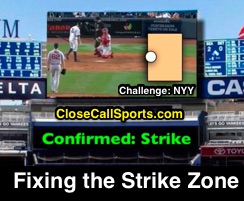
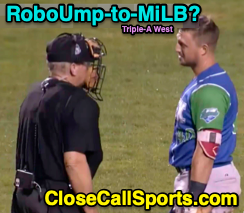
An Automated Ball/Strike System style RoboUmp system will be used in Triple-A West (Pacific Coast League) and at Triple-A East (International League)'s Charlotte ballpark after its use in the Atlantic League and Low-A Southeast MiLB League.

MLB Adopts the Tmac Challenge System
...in a manner of speaking. When Tmac suggested a zero-margin-of-error challenge system in 2019, we discussed the difference between a finite challenge system with zero-error called the Trajectory Measured by Automated Caller (TMAC; simpler, but less accurate) vs a challenge system which employs a margin-of-error called the Graphic Inaccuracy Logic system (GIL; more complex, but more accurate). Perchance to be renamed to Latent Information Not Definite, Scientific Accuracy Yielded.

At the time, the proposal that seemed to have a greater chance of being used in professional baseball was the zero-error TMAC system, as MLB has recently trended toward embracing technology without admitting potential shortcomings.

The MiLB challenge system will follow similar ground rules at its Low-A Southeast testing grounds. After the umpire calls a ball or strike, the old-fashioned way, the pitcher, catcher, and batter (alone) will have the ability to immediately appeal the umpire's call, with a maximum of three unsuccessful challenges per team, similar in theory to existing Replay Review rules.

Video as follows:

Former AL Umpire Terry Cooney Dies at 88

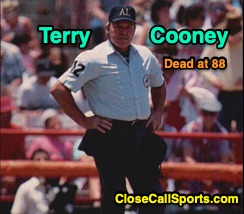
Terry Cooney, an American League umpire from 1974-1992, has died at the age of 88.

Born April 12, 1933 in Condon, Oregon, Cooney officiated his first Major League contest in 1974 (Sept 27: Twins-Angels at Anaheim Stadium), umpiring 2,233 regular season games, 3 League Championship Series, and the 1981 World Series until his retirement 18 years later, following a season- and career-ending knee injury in September 1992.

A multi-sport athlete growing up, Cooney played high school basketball at Sacred Heart Academy in Salem and also was part of Sacred Heart's 1950 football championship.

Cooney came to California for school and to play semipro baseball, eventually moving to the Fresno area and getting a job as a correctional officer, before an inmate encouraged him to pursue professional officiating: "I like to tell people I was conned into umpiring."

After graduating from umpiring school in 1969, he joined the California League, followed by stints in the Texas and Pacific Coast Leagues before his 1974 AL debut and permanent appointment to the staff in 1975.

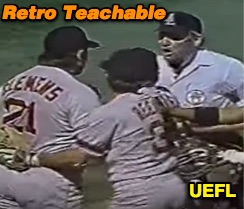
Cooney is a member of the Fresno Athletic Hall of Fame. In 2018, we published a Retro Teachable featuring Cooney's ejection of Boston Red Sox pitcher Roger Clemens during Game Four of the 1990 ALCS.

Thursday, March 10, 2022

Welcome Back - MLB, Players Agree to 2022 Season

MLB owners and the Players Association reached agreement on a new CBA that will allow the 2022 regular season to begin in early April, albeit after Commissioner Rob Manfred already canceled a week's worth of games. The agreement includes several rules changes, which we detail below.

First, some key dates:
> Spring Training will begin March 17;
> Opening Day is moved to April 7;
> 12-team postseason format (increase from 10 teams);
> 9-inning double headers return (was 7-inn from 2020-21);
> Extra innings begin with bases empty (no runner on 2nd base).
Update: MLB and MLBPA have since reversed course and agreed to keep the extra-inning base runner procedure intact for the 2022 regular season.

Amongst the rules MLB reserves the right to implement beginning in 2023 are:
> Pitch clocks may be introduced;
> Defensive shifts may be banned or made illegal, penalty to be determined;
> Larger bases may be used.

Several of the 2023-and-beyond rules changes that may occur follow testing in MLB's Minor Leagues, Arizona Fall League, or the Atlantic League.

Close Call Sports will publish umpire roster and crew information as the season approaches and will open the UEFL Draft/Registration as well.

Video as follows:

Friday, February 4, 2022

Culbreth & Danley Round Out Retirements (Joining Davis, Gorman & West), with Diaz, Gibson, Hudson, Kulpa, and Welke Promoted to Crew Chief

Major League Baseball announced its final umpire staff changes for 2022, with Fieldin Culbreth and Kerwin Danley retiring alongside Gerry Davis, Brian Gorman, and Joe West. Crew Chief promotions and new full-time umpires hires were also announced.

MLB's official announcement confirms the hiring of Ryan Additon, Sean Barber, John Libka, Ben May, and Roberto Ortiz to the full-time staff. The new-hires have worked the following numbers of MLB games prior to 2022:
> Additon: 381 major league games.
> Barber: 693.
> Libka: 371.
> May: 658.
> Ortiz: 412.

Retiring umpires are Culbreth, Danley, Davis, Gorman, and West. They retire with the following experience:
> Culbreth: 29 years, 3140 regular season. 1 Wild Card, 8 Division, 7 Lg Champ, 3 World Series.
> Danley: 30 years, 2656 regular season. 1 Wild Card, 7 Division, 2 Lg Champ, 2 World Series.
> Davis: 40 years, 4849 regular season (5k overall). 3 WC, 13 DS, 11 LCS, 6 World Series.
> Gorman: 31 years, 3430 regular season. 1 WC, 10 DS, 7 LCS, 3 World Series.
> West: 44 years, 5460 regular season. 4 WC, 8 DS, 10 LCS, 6 World Series.

West retires as the umpire with the most games officiated in MLB history; Gerry Davis has the fourth-most all-time. Davis retires with the second-most League Championship Series officiated with 11 (Jerry Crawford 12), and Joe West with the third-most (10). Davis has the most Division Series officiated with 13 and Brian Gorman has the 6th-most. Gerry Davis has the most postseason games in MLB history (151) and Joe West is second (132, presently tied with Ted Barrett).

Promoted to crew chief to fill the five retirements are Laz Diaz, Greg Gibson, Marvin Hudson, Ron Kulpa, and Bill Welke. Of that list, Diaz, Hudson, Kulpa, and Welke served as interim crew chiefs for MLB's COVID-shortened 2020 season (Greg Gibson opted out).
Related PostMLB Names 7 Interim Crew Chiefs for 2020 (7/23/20).

Monday, January 24, 2022

As Atlantic League Folds RoboUmp Experiment, MLB Steps Up Automated Strike Zone in Minor Leagues

Whereas the Atlantic League last week issued a news release announcing it has abandoned its Automated Ball/Strike System experiment by virtue of returning pitch calling duties to human plate umpires, MLB looks to double-down on RoboUmp technology, bringing ABS to its minor league affiliates, including Triple-A.

According to Axios, MLB quietly announced, through its seasonal jobs board, it may be seeking to experiment with ABS in Triple-A West (formerly Pacific Coast League), as well as certain lower levels: "Major League Baseball (MLB) will be operating the Automated Ball and Strike system (ABS) in select Spring Training venues in Florida, in AAA West and Low-A Southeast, and potentially in other non-MLB games and venues," the posting states.

MLB's minor league ABS recruitment follows Atlantic League President Rick White's explanation of the league's elimination of an automated strike zone: "test rules and equipment are transitional by definition: Some elements remain, others are tweaked and still others are abandoned. That's why MLB and the ALPB conduct the tests."

Now that MLB will look to install the Hawkeye data-powered computer zone technology, we can refer to several recent instances of RoboUmp's use in affiliated baseball, such as its puzzling calls during an October Arizona Fall League game that led teams and umpires to end the game in the 8th inning due to both teams having exhausted their pitchers trying to satiate ABS' 22-walk-producing strike zone.

A smattering of ball/strike arguments regarding ABS also befell the 2019 (pre-COVID) AFL, including HP Umpire Jose Navas' October 15, 2019 ejection of batter Jacob Heyward for arguing a computer-called strike three call. Whereas a number of players subsequently complained about ABS following the AFL implementation, MLB Commissioner Rob Manfred at the time announced ABS will nonetheless debut in 2020.

Tuesday, January 18, 2022

Atlantic League Nixes Robot Umpires, Will Return to Human-Called Strike Zone in 2022

After two years of testing MLB's Automated Ball-Strike System, the Atlantic League will revert to having human umpires call pitches, explaining RoboUmp's cancelation as a natural part of the experiment process while stopping short of deeming the test unsuccessful: "Test rules and equipment are transitional by definition: Some elements remain, others are tweaked and still others are abandoned. That's why MLB and the ALPB conduct the tests."

The ALPB's news release also indicated the formerly independent MLB partner league will return its experimental 61'6" mound distance to the "accepted norm" of 60-feet, six-inches for its 2022 season.

News of the Atlantic League's RoboUmp cancelation follows several high-profile instances of peculiar ball/strike decisions from the computer umpire, many of which we have documented at Close Call Sports under the label "Computer Strike Zone" such as Frank Viola's pair of ejections arguing ball/strike calls made by the ABS computer. It also comes one year after MLB described the Atlantic League's ABS test as a "success."

MLB Commissioner Rob Manfred, currently presiding over an owners-players union dispute and lockout that continues to threaten Spring Training and potentially part of the 2022 regular season, previously cited his support for implementing the electronic ABS zone at the Major League level, specifically citing the Atlantic League experiment as evidence of RoboUmp's success. Meanwhile, then-Chief Baseball Officer Joe Torre disagreed, stating, "I don't see the robotic strike zone happening."

Now that the Atlantic League has scrapped the project, will Minor League Baseball—not without its own set of ABS controversies—follow suit?

Friday, January 14, 2022

MLB Hires Sean Barber & Ben May as Full-Time Umpires

Rounding out its set of early January 2022 hires, MLB promoted Sean Barber and Ben May to the full-time major league umpire staff, joining Ryan Additon, John Libka, and Roberto Ortiz who also got the call.

Sean Barber's perseverance through eight years and 693 games of MLB experience prior to official hiring signifies the longest period of time spent as a Triple-A call-up umpire of MLB's five January hires. Barber's Opening Day (April 1) 2014 debut in San Diego followed a minor league journey that begin upon graduation from the Harry Wendelstedt Umpire School in 2006. Barber has officiated in the Appalachian, South Atlantic, Florida State, Southern, Arizona Instructionl, Venezuela, Arizona Fall, and International Leagues. Additionally, Barber officiated the 2013 World Baseball Classic qualifier in Jupiter, Florida (not terribly far from his hometown of Lakeland, FL).

Ben May, who nearly ties Barber's MLB history with eight years and 658 games, debuted on April 17, 2014 in Minnesota. May's minor league career includes stops at the Gulf Coast, New York-Penn, Midwest, Florida State, Eastern, Arizona Fall, and International Leagues. Like Barber, May also officiated the 2013 World Baseball Classic Qualifying round, but did so in Germany.

With MLB's five new-hires, you might be wondering who in addition to those previously reported (Davis, Gorman, West) have retired. Stay tuned for future announcements, which will include crew chief promotions to fill the new vacancies.